
by LUKE ZUNGA
JOHANNESBURG, (CAJ News) – ARTICLE 2(4) of the Charter of the United Nations (UN Charter) prohibits the use of force against another country.
This article serves as the cornerstone of the United Nations’ legal framework, requiring all member states to refrain from violating the sovereignty and territorial integrity of other states.
Article 51 of the Charter allows self-defence if a country is attacked.
More specifically, it states that nothing in the Charter shall impair the inherent right of individual or collective self-defence if an armed attack occurs against a Member of the United Nations (UN) until the United Nations Security Council (UNSC) has taken the measures necessary to maintain international peace and security.
The Charter further states that measures taken by member states in exercising this right of self-defence must be immediately reported to the United Nations Security Council and shall not affect the authority and responsibility of the Council to take action necessary to maintain or restore international peace and security.
The prohibition against attacking another country lies at the heart of the United Nations Charter and the formation of the United Nations itself.
In the case of the Israel–United States confrontation with Iran, the level of meticulous planning reportedly aimed at eliminating Iranian leaders raises questions about whether such actions extend beyond self-defence.
Reports indicate that the Central Intelligence Agency (CIA) of the United States and the Mossad Intelligence Agency (Mossad) of Israel used satellite intelligence and networks of agents to track Iranian leaders.
Iran, historically known as Persia, is one of the world’s oldest civilisations.
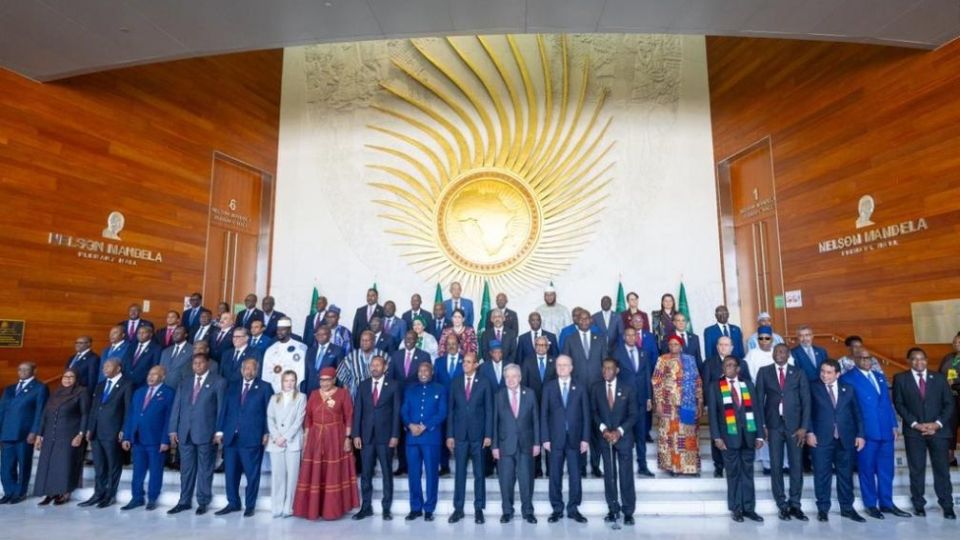
The Chairperson of the African Union Commission (AUC), Mahmoud Ali Youssouf, said the African Union (AU) was deeply concerned by reported military strikes carried out by the United States in coordination with Israeli forces inside the Islamic Republic of Iran.
He stressed that all parties must act in accordance with international law and the United Nations Charter to safeguard international peace and security.
From Africa’s most populous country, the Government of the Federal Republic of Nigeria urged the parties involved in the conflict to avoid actions likely to escalate hostilities, calling instead for restraint and a return to negotiations.
The President of the Republic of South Africa, *Matamela Cyril Ramaphosa, reiterated calls for an immediate ceasefire in the ongoing conflict involving Iran.
The Government of the Republic of Ghana stated that the unfolding conflict in the Middle East raises urgent and unavoidable questions for the current international order. Ghana also closed and evacuated its embassy in Tehran.
The Arab Republic of Egypt remained largely silent. Analysts note that Egypt’s caution reflects competing pressures: a strategic partnership with the United States, a peace agreement with Israel, and a historically pragmatic relationship with Iran.
In the Kingdom of Morocco, diplomatic relations with Iran had been strained for years after Morocco accused Tehran of providing support to the Polisario Front, a separatist movement.
However, recent diplomatic contacts in Rabat suggested a possible thaw in relations. Morocco has also pursued an ambitious military modernisation programme involving United States defence systems such as the High Mobility Artillery Rocket System (HIMARS) and the Army Tactical Missile System (ATACMS).
The President of the Republic of Kenya, William Samoei Ruto, called for global cooperation and diplomatic dialogue to reduce escalating tensions in the Middle East.
The United Republic of Tanzania strengthened its relationship with Iran by signing seven Memoranda of Understanding (MOUs) during the fifth Joint Permanent Commission (JPC) meeting held at the Julius Nyerere International Convention Centre (JNICC) in Dar es Salaam on October 17, 2024.
The agreements covered investment, energy, oil and gas, technology, security and defence.
The Republic of Zimbabwe and Iran have maintained cooperation despite Western sanctions, with both countries emphasising collaboration to support national development.
The Federal Democratic Republic of Ethiopia signed a major security and intelligence cooperation agreement with Iran on May 6, 2025, marking a significant development in relations between the Horn of African nation and Tehran.
Overall, many African leaders have adopted a neutral diplomatic stance, avoiding direct criticism of Israel, the United States or Iran.
Observers suggest that economic dependence on foreign investment and aid from Western and Middle Eastern partners often shapes these cautious positions.
– CAJ News