
by SAVIOUS KWINIKA
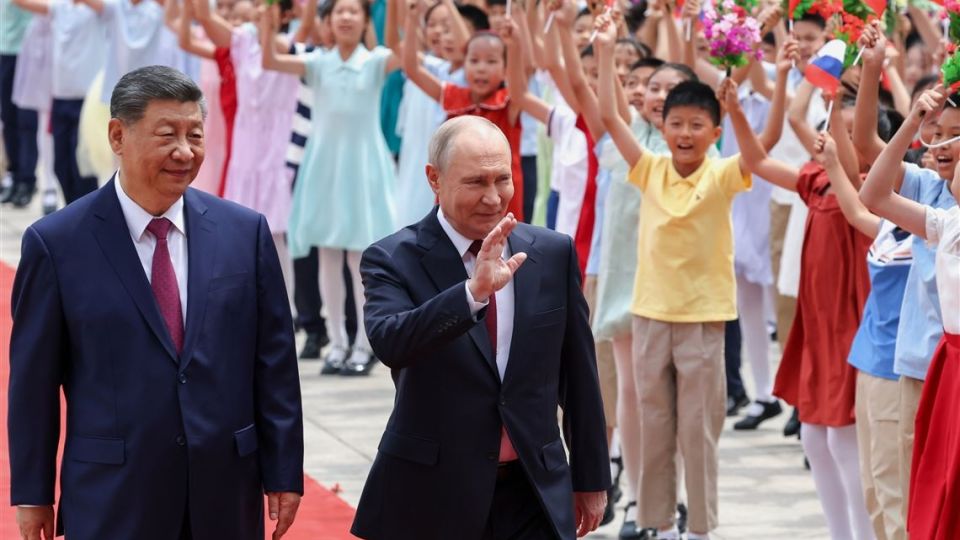
JOHANNESBURG, (CAJ News) – UNITED States President Donald Trump’s recent state visit to China has triggered intense global debate, with social media users comparing his reception in Beijing to the grand welcome earlier accorded to Russian President Vladimir Putin.
While Trump received formal diplomatic treatment expected for an American president, many online commentators argued that Putin appeared to enjoy warmer chemistry, deeper symbolism and greater strategic comfort during his engagements with Chinese President Xi Jinping.
Images of Xi and Putin sharing relaxed conversations, smiling during ceremonies and projecting what analysts described as “strategic trust” quickly circulated online.
In contrast, users claimed Trump’s visit appeared more restrained and transactional, fuelling speculation that global power dynamics are gradually shifting eastwards.
Across X, formerly Twitter, users described China as the emerging centre of global stability while portraying the United States as a declining power struggling to maintain post-Second World War dominance.
“I think this means that the centre of power in the world is shifting from Washington DC to Beijing because China represents a pole of stability in the world while the United States represents a pole of chaos in the world,” wrote Faraday Hu.
Helmut Brodesser added: “The era of U.S. hegemony, bombing countries for regime change and bullying via sanctions is over.”
The reactions followed renewed online discussions about America’s military interventions since 1945, including operations in Vietnam, Iraq, Afghanistan, Libya, Syria, Somalia and Yugoslavia among many others.
Critics argued that decades of military campaigns, sanctions and regime-change policies damaged Washington’s moral standing globally.
By contrast, many social media users praised China’s rise as largely economic and diplomatic rather than military.
“China is the new superpower, you agree or disagree, that is the truth,” posted Top Layer.
Political commentators and academics joining online debates said Beijing’s growing influence stems from infrastructure investments, trade partnerships and respect for sovereignty, particularly across Africa, Asia and Latin America.
Solani Thom Tanjo noted: “It signals a shift to a multipolar world, where power is no longer dominated by the West alone.”
Others linked China’s rise to the growing influence of BRICS+, whose members increasingly advocate a global order less dependent on Washington and Brussels.
“BRICS+ is leading the world in that regard,” wrote Lehlohonolo_13. “Humanity is choosing to live and develop together, instead of wars.”
Some observers focused on body language during the diplomatic meetings.
“Did someone notice that Xi is more relaxed and responsive as compared to when he met with Trump?” asked Zeeshan Hafeez.
Meanwhile, Ewinters commented: “Russia’s visit was planned, US’ was delayed. Iran is emerging as a global power after US’ blunder.”
Several political scholars have argued in recent years that China has carefully positioned itself as an advocate for stability, non-interference and economic cooperation.
Beijing consistently promotes respect for national sovereignty, although it remains uncompromising regarding Taiwan, which it considers part of China.
Analysts say this message resonates strongly within developing nations that historically experienced colonialism, sanctions or foreign intervention.
John Warren wrote: “Now together, the grown-ups in the room will put the world to rights (referring to presidents Xi and Putin).”
Not everyone agreed with the celebrations surrounding China’s growing influence.
Some cautioned that every superpower ultimately faces challenges maintaining global dominance.
“Something like that has already happened in history,” wrote Dem Smitt. “The USSR was mighty and fearsome, but it collapsed.”
Still, the dominant mood online suggested admiration for China’s patient ascent to global prominence without large-scale foreign wars.
“Thank God we have Xi and Putin,” wrote Nardya Domnick. “Multipolarity is doing us all good.”
Whether symbolic or substantive, the contrasting receptions for Trump and Putin in Beijing appear to have intensified perceptions that the international order is changing rapidly, with China increasingly viewed as a confident architect of a new global era.
– CAJ News