
The market for trading brokers in South Africa has changed significantly in the post-pandemic economy. It has evolved from a niche, high-barrier sector into a digitized, accessible and heavily regulated industry. As a result of the pandemic increasing home-based trading and the integration of technology, brokers have moved toward mobile-first sites, enhanced financial education and stricter compliance frameworks overseen by the Financial Sector Conduct Authority (FSCA).
The Covid-19 pandemic accelerated the digital transformation of many industries globally, and the finance sector in South Africa followed suit. What began as a period of enforced adaptation quickly turned into a structural shift, particularly within online trading. As markets continued to fluctuate and remote access became the new norm, south african trading brokers found themselves rapidly evolving their services to meet the rising demand, technological expectations and regulatory requirements.
Today, the post-pandemic environment is marked by a redefined brokerage system that’s been shaped by mobile accessibility, enhanced digital infrastructure, expanding retail participation and a more prominent role being played by compliance and investor education.
How COVID-19 Changed Market Access
In early 2020, lockdowns and social restrictions limited physical interactions and, as a result, people found themselves relying more heavily on digital institutions than ever before. For financial markets, this meant that online trading sites became essential for people’s continued participation. South African brokers responded to this by accelerating their digital upgrades so they could remain accessible across devices and networks.
The digital technology that was necessitated by the pandemic regulations turned online trading from a niche activity into a mainstream financial resource. Now, the local digital investment market is projected to reach $8.49 billion this year, with neobrokers accounting for $5.36 billion of that total. The lockdown restrictions that prevented physical access to banks meant technology was no longer just a convenience, but a survival necessity for financial management.
Industry experts have noted that digital integration strategies that had previously been planned to take place over several years were quickly completed within months due to pandemic pressure. The crisis also expedited the final dissolution of cheques from South Africa’s financial system after being used for over a century.
Retail Participation and Changing Demographics
Retail trading may have once been viewed as a pandemic-era anomaly, but it has since become a permanent pillar of the financial system. For many people who began trading during the pandemic, it’s not just a hobby anymore but a structured, mainstream digital investment that’s being driven by a younger, more tech-savvy generation.
There’s also been a strategic shift in the mindset of retail traders. They’re no longer sitting in the get-rich-quick mindset that was characteristic of the 2020/2021 era; now, they’ve moved toward strategic diversification and long-term wealth building. An improvement in financial literacy has also led to more frequent but shorter, high-quality trading sessions that are being facilitated by real-time mobile alerts.
The market is currently dominated by traders between the ages of 20 and 40 who demand intuitive, social-media style interfaces that remove many of the barriers that have traditionally been associated with trading and investing. There’s been a marked rising interest amongst the younger demographics, with youth engagement reaching an all-time high when the JSE Investment Challenge saw over 66,000 participants in 2025, a trend that has continued into the 2026 competition cycle.
Brokers are increasingly integrating educational resources into their apps to cater to this younger demographic’s preference for learning while doing. These educational materials, digital tools and in-app resources have also played a significant role in supporting people who are entering into the market for the first time.
Moving forward, brokers will be placing a stronger emphasis on educational features, informational content and user-centric designs to support informed decision making rather than speculative behaviour.
Mobile-First and Real-Time Engagement
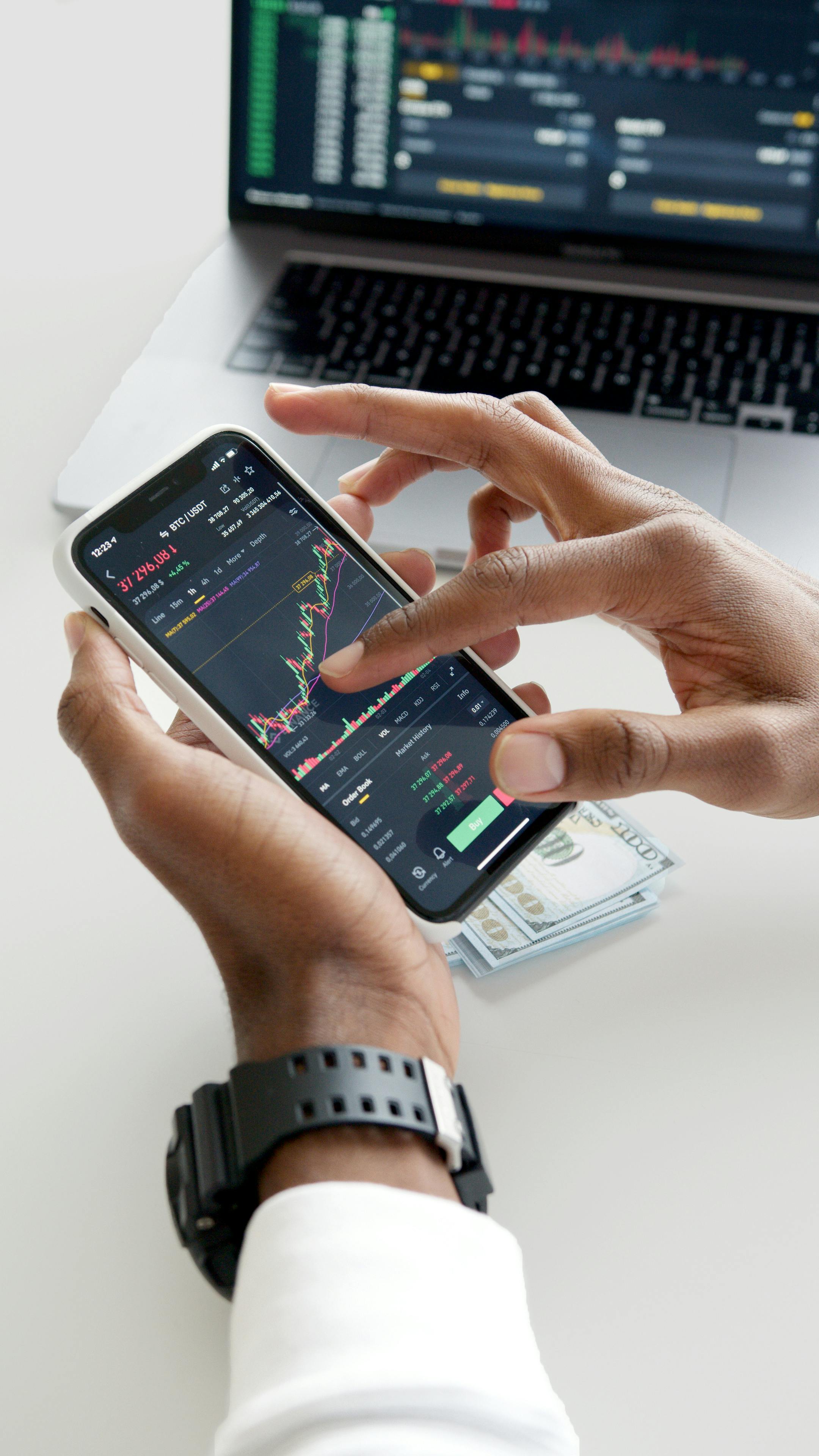
With a population where over 90% of internet users are accessing the internet on their smartphones, the trading experience has been redesigned to align more closely with social media and online banking. Before the pandemic, many brokers had desktop-centric sites with some accompanying mobile interfaces, but since then, the paradigm has shifted. Now, most websites are developed in mobile-first designs.
Smartphones are now commanding over 72% of the digital market share in South Africa, with mobile trading overtaking desktop trading both in volume and value. Thanks to real-time engagement, you can now manage your positions during your daily commutes or between meetings. This completely removes the need for a desktop setup. The data that’s been collected from major trading sites has shown that peak activity occurs between 6 am and 10 a.m, which aligns with morning routines and commutes for most people.
The planned shutdown of 2G and 3G networks by December 2027 is accelerating the transition to 4G and 5G devices, further enhancing the speed of real-time data delivery. Mobile apps have also significantly lowered entry barriers, allowing you to open ZAR-denominated accounts with minimal capital from anywhere in the country, including rural areas.
Regulation and Compliance
Another defining aspect of the post-pandemic era has been the reinforcement of regulatory frameworks. Now, regulation and compliance have become the primary benchmarks for broker integrity in South Africa. The Financial Sector Conduct Authority (FSCA) has adopted more of a pre-emptive and proactive model, using advanced supervisory technology as a way to maintain market stability and protect retail investors.
Strengthening the Regulatory Perimeter
The Over-the-Counter Derivative Provider (ODP) license is now a mandatory requirement for any broker offering CFDs or forex as a service. In addition to this, under the Conduct of Financial Institutions (COFI) Bill, which is set for parliamentary tabling in early 2026, licensing is shifting from product categories to specific activities like providing advice or executing trades.
Crypto regulation has also been introduced, and over 250 Crypto Asset Service Providers (CASPs) are now fully licensed, bringing digital assets under the same “Fit and Proper” requirements as traditional financial products.
Enhanced Enforcement and Deterrence
The FSCA has significantly increased its enforcement actions to act as a credible deterrent. In the 2023/24 period alone, administrative penalties reached a total of $57 million, compared to $9 million the previous year.
Regulators have also moved toward remedial enforcement, which includes over 1,000 FSP license suspensions and high-profile debarments for misconduct like unauthorized transactions. Highlighting this aggressive stance, the FSCA imposed a record $122 million administrative penalty on Banxso (Pty) Ltd and its leadership for contraventions in late 2025.
Consumer Protection Standards
Integrity is now measured by outcomes, specifically with regard to how well brokers embed TCF principles throughout the entire client lifecycle, from advertising to post-sale service. New standards demand that all client communication must be accurate and written in plain language; this stipulation effectively bans marketing that hides fees or exaggerates benefits.
This regulatory evolution has encouraged brokers to be more transparent about things like their fees, execution policies, and risk disclosure, which is contributing to a more structured and accountable trading ecosystem.
What began as a reactive shift during lockdown has matured into a permanent transformation defined by mobile-first innovation, expanded retail participation, and significantly strengthened regulatory oversight.
A Digital Foundation for Future Growth
Today’s brokerage environment is faster, more accessible, and more transparent than ever before. Smartphones have replaced desktop setups as the primary trading hub and younger, tech-savvy investors are reshaping mobile design and engagement patterns. At the same time, regulatory authorities have tightened supervision, reinforcing consumer protection and elevating compliance as a central pillar of market credibility.
But this evolution has not simply been about convenience. The industry has demonstrated an ability to adapt under pressure, modernize rapidly, and integrate technology without abandoning oversight. As South Africa moves further into a digitally driven financial era, brokers that prioritize accessibility, education, transparency, and regulatory integrity will define the next phase of growth.
In many ways, the post-pandemic brokerage ecosystem is no longer playing catch-up with global trends because it is actively shaping a more connected, accountable, and mobile-centric future for financial participation in South Africa.