
by SAVIOUS KWINIKA
JOHANNESBURG, (CAJ News) – GLOBAL automotive momentum took a decisive turn for South Africa this week as Jetour confirmed plans to begin local production of its popular T-Series models in the country from 2027.
The announcement was made by Ke Chuandeng, President of Jetour International, during the ongoing Auto China 2026, one of the world’s most influential motor shows, running from 24 April to 3 May in Beijing.
The move marks a significant milestone not only for Jetour but also for South Africa’s automotive sector, reinforcing the country’s growing importance as a global vehicle production hub.
Although Jetour operates as a distinct brand locally, it forms part of the wider Chery Group.
This relationship has become increasingly relevant following Chery’s acquisition of the Rosslyn manufacturing plant from Nissan.
The development enables Chery South Africa to transition from an importer to a full-scale manufacturer.
Production at the Rosslyn facility is expected to reach 50 000 units annually by mid-2027, while creating more than 3 000 jobs across manufacturing and supply chains.
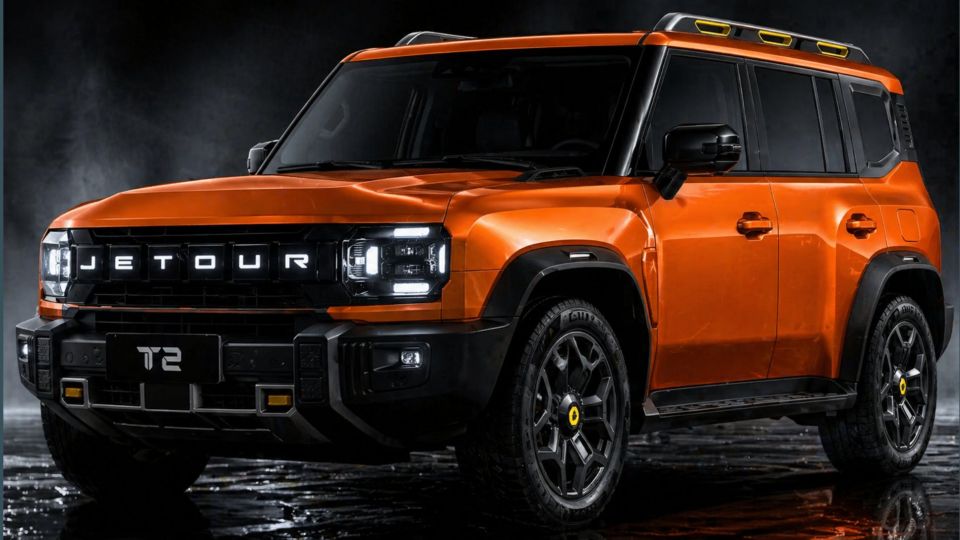
As part of this expansion, Jetour’s T-Series—introduced to the South African market in October last year—will also be assembled locally.
The T1 and T2 models have already exceeded expectations, with more than 4 500 units sold nationwide, signalling strong consumer demand and confidence in the brand.
Speaking at the exhibition, Nic Campbell highlighted the broader significance of the development:
“Being at Auto China this week has been an important moment for us,” he said.
“This announcement to produce the Jetour T-Series locally positions South Africa as an integral part of Jetour’s global ambitions and underscores the growing influence of Chinese automakers in our market. This is undoubtedly a very exciting time for Jetour. In just 18 months since launching independently in South Africa, we have introduced four internal combustion models and two PHEV models, with further upgrades and new models planned for this year and next. This latest step into local production really marks a significant next phase in our journey.”
The broader context of the announcement reflects major shifts within the global automotive industry.
Auto China 2026 has placed a strong emphasis on electrification, hybridisation and intelligent mobility systems.
Electric and plug-in hybrid vehicles are no longer niche offerings but central to manufacturers’ long-term strategies.
Jetour has already aligned itself with this transition, having recently launched its plug-in hybrid (PHEV) variants—the T1 and T2 iDM models—in South Africa.
Beyond the immediate commercial implications, the establishment of a local manufacturing plant carries wide-ranging economic and developmental benefits for host countries.
Firstly, it generates substantial employment opportunities, not only within the factory itself but also across logistics, parts supply, maintenance, and dealership networks.
Secondly, it stimulates local industries by encouraging the growth of component manufacturing and supplier ecosystems.
In addition, domestic production reduces reliance on imports, helping to stabilise vehicle prices and improve accessibility for consumers.
It also facilitates skills transfer, as local workers gain exposure to advanced manufacturing technologies and global best practices.
Over time, this contributes to industrial capacity building and enhances a country’s competitiveness in international markets.
Furthermore, such investments often lead to infrastructure development, including improved transport networks and energy systems, which benefit the wider economy.
For South Africa, already regarded as one of Africa’s leading automotive producers, Jetour’s entry into local manufacturing strengthens its position as a gateway for vehicle production on the continent.
Since its inception in 1990, Auto China has evolved into a premier platform for innovation, attracting hundreds of thousands of visitors and showcasing more than 1 450 vehicles this year alone, including over 180 global debuts.
As global automotive powerhouses increasingly look towards emerging markets, Jetour’s investment signals confidence in South Africa’s industrial potential.
It also underscores a broader trend: the future of mobility is not only electric and intelligent, but increasingly global, interconnected, and locally rooted.
– CAJ News