
by SAVIOUS KWINIKA
JOHANNESBURG, (CAJ News) – SOUTH Africa cannot achieve meaningful economic growth or create jobs at scale without pursuing a value-adding industrialisation strategy, a senior government official has said.
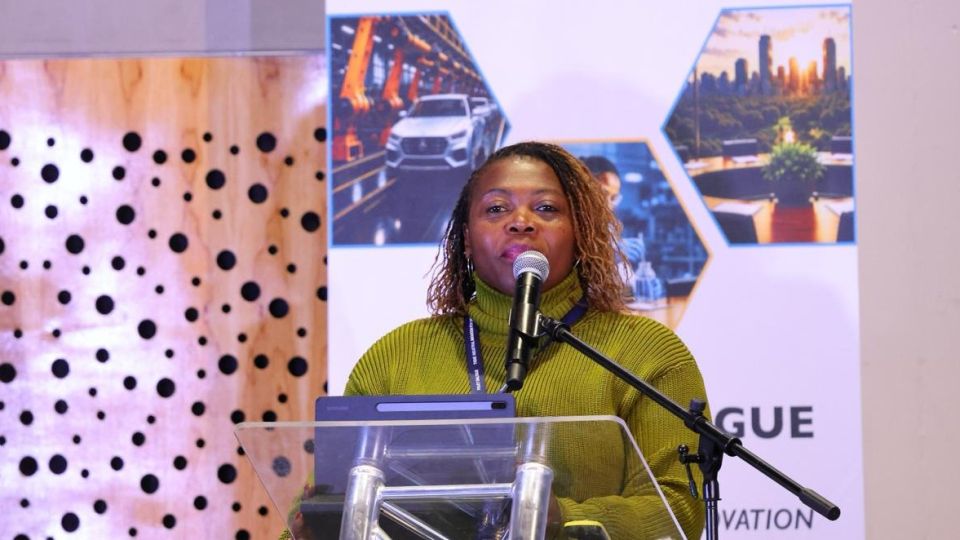
Speaking at the Policy Dialogue on Industrialisation Through Innovation in Johannesburg, Acting Chief Director for Innovation and Technology at the Department of Trade, Industry and Competition (the dtic), Nontombi Maseko, emphasised the critical role of innovation in driving the country’s industrial development agenda.
The dialogue, held under the theme “Industrial Policy Coherence and Innovation Governance”, brought together policymakers, industry leaders, researchers and development stakeholders to explore ways of strengthening innovation-led industrialisation.
It was hosted by the National Advisory Council on Innovation (NACI) in partnership with the Department of Science, Technology and Innovation (DSTI), the dtic and the OR Tambo Special Economic Zone.
Maseko said industrialisation remained central to South Africa’s efforts to stimulate economic growth, create sustainable employment opportunities and improve competitiveness in global markets.
“There is no meaningful economic growth or significant job creation that can be achieved without a value-adding industrialisation pathway,” she said.
According to Maseko, innovation has become a key enabler of re-industrialisation by improving productivity, supporting economic diversification and positioning local industries to participate in higher-value global supply chains.
She noted that innovation also deepens skills development and enhances export competitiveness, adding that support mechanisms were required throughout the innovation cycle, from concept development to commercialisation and market expansion.
“The dtic is advancing manufacturing to ensure that industrialisation is realised. Innovation is a central lever to re-industrialisation by improving productivity, supporting diversification and enabling participation in high-value global markets,” Maseko said.
She highlighted the department’s role in supporting industrial development through targeted incentives, procurement programmes and sector-specific interventions designed to strengthen domestic manufacturing capabilities.
Among the key initiatives cited was the National Technology Commercialisation Strategy, jointly developed by the dtic and DSTI to accelerate the commercialisation of locally developed technologies for both domestic and international markets.
Maseko also pointed to green hydrogen as a strategic opportunity for South Africa to move beyond exporting raw minerals and establish itself as a producer of clean energy technologies and advanced industrial products.
She warned that failure to develop local manufacturing capabilities for critical components such as electrolysers and fuel cells could undermine the broader economic benefits of the emerging green hydrogen industry.
“The industrialisation imperative is clear. If South Africa does not build local manufacturing capability for components such as electrolysers and fuel cells, the green hydrogen economy will generate export revenue without generating industrial jobs or building domestic capability,” she said.
Maseko stressed that innovation was not treated as a stand-alone policy area by the dtic but was integrated across all industrial development instruments.
These include localisation programmes, procurement designations, investment incentives, Special Economic Zones and funding mechanisms such as the Support Programme for Industrial Innovation (SPII) and the Technology and Human Resources for Industry Programme (THRIP).
Over the past five years, government has disbursed R49 million through SPII and R157 million through THRIP to support technology development and industrial innovation.
“Localisation strengthens capability, capability fuels innovation, and innovation drives industrialisation,” Maseko said.
The dialogue assessed the current state of South Africa’s industrial innovation ecosystem, identified systemic challenges and highlighted best practices across key sectors.
Participants also reviewed existing policy instruments aimed at supporting industrialisation and innovation, while exploring ways to improve their effectiveness and impact.
Organisers said the event sought to strengthen collaboration among government departments, academia, research institutions, think tanks, industry, small businesses, innovation intermediaries and civil society organisations.
The broader objective is to foster long-term partnerships capable of accelerating innovation-driven industrial development and supporting South Africa’s economic transformation.
– CAJ News