
from MARIA MACHARIA in Nairobi, Kenya
Kenya Bureau
NAIROBI, (CAJ News) – THE compensation of about 2 000 victims of human rights violations over the past decade, largely at the hands of state security forces, marks a significant step towards redress for those affected.
It is a milestone in ending impunity in Kenya.
The compensation programme is set to begin in the week of June 22.
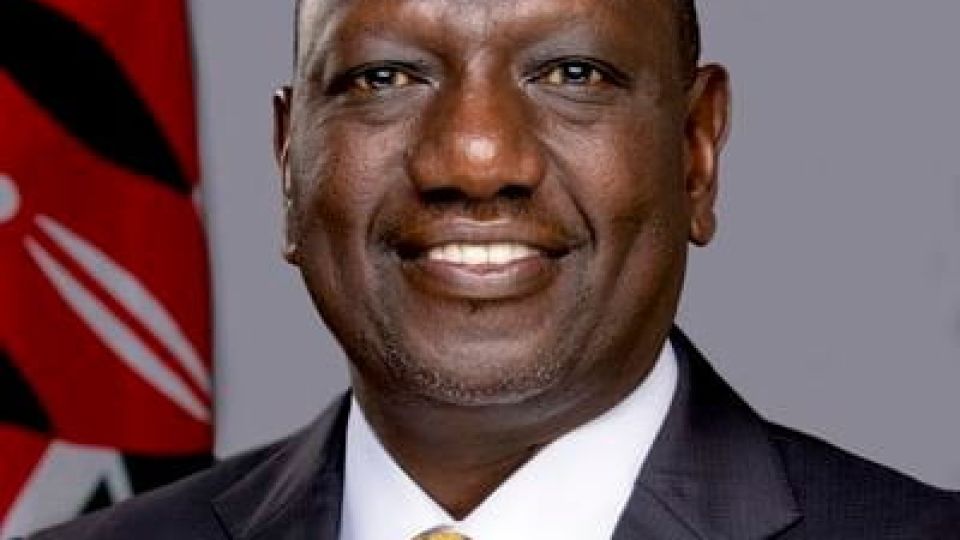
The programme, estimated to cost Sh2 billion (about US$15 million), has been formalised after President William Ruto received the report on the Framework for Compensation and Reparations for Victims of Human Rights Violations During Protests and Picketing, prepared by the Kenya National Commission on Human Rights (KNCHR).
His government, which has been in power since 2022, has been among the perpetrators of these human rights abuses.
“For far too long, whenever Kenyans have exercised their constitutional and democratic rights to assemble, picket, demonstrate and petition, the outcome has too often been marked by violence, injury, loss of life, destruction of property, bitterness and division,” Ruto said.
He was speaking at State House as he received the report from the KNCHR.
Ruto conceded, “In some instances, the response of our security agencies to public demonstrations has involved excessive force, resulting in further violations of rights and, tragically, the loss of innocent lives.”
“For decades, successive generations of leaders have condemned these tragedies. Yet, despite those condemnations, we have not fundamentally resolved this challenge, largely because it is neither simple nor easy to do.”
In March this year, Ruto tasked the commission with developing and submitting a framework to guide the provision of compensation and reparations to victims, as well as submitting, publishing and publicising a report containing the framework.
This is the first time in Kenya’s history that the government has initiated a reparations process on its own accord.
The rights commission noted that this signified a commitment to transition from documentation to redress, and from acknowledgement to reforms that ensure accountability.
It has documented 1 815 claims and received 1 022 claims from the Independent Policing Oversight Authority.
Through this process, the commission has so far verified and obtained consent from a total of 1 101 victims across six categories of violations.
These comprise the right to life (245 victims), sexual violence (75 victims), freedom from torture (135 victims), freedom and security of the person (473 victims), the right to property (138 victims) and enforced disappearance (35 victims).
Compensation for the most severe violation, namely the loss of the right to life, including fatal shootings, deaths in custody or deaths during demonstrations, is set at Sh2,5 million.
Victims of torture and sexual violence are to receive Sh2 million, in addition to medical expenses.
The minimum compensation is Sh50 000, plus compensation for violations including arbitrary arrest and detention and minor physical injury.
Claris Ogangah, KNCHR Chairperson, said the framework seeks to establish a victim-centred, transparent and accountable system capable of delivering accessible and effective remedies in accordance with the Constitution and international human rights standards.
“The stories captured in the Reparations Framework Report remind us that behind every statistic is a human being, a family and a community whose suffering has often remained unseen and unacknowledged,” she said.
Ogangah said that by giving voice to those experiences, the report contributed to a national process of healing founded on truth, recognition and remembrance.
The Office of the United Nations High Commissioner for Human Rights (OHCHR) lauded the breakthrough.
“OHCHR Kenya welcomes efforts led by the KNCHR and other institutions to advance accountability, justice and victims’ rights in line with international human rights standards. OHCHR remains ready to support these efforts,” it stated.
Kenya, with a history of violent elections, is preparing for another round of polls in August 2027.
– CAJ News