
from NJABULO BUTHELEZI in Durban
KZN Bureau
DURBAN, (CAJ News) – THE last time South Africa experienced mass looting of businesses, more than 350 people died during the violence and the economy was sent into a tailspin.
That was in 2021 when looters took advantage of the protests that followed the arrest of former president, the controversial Jacob Zuma, on charges of contempt of court.
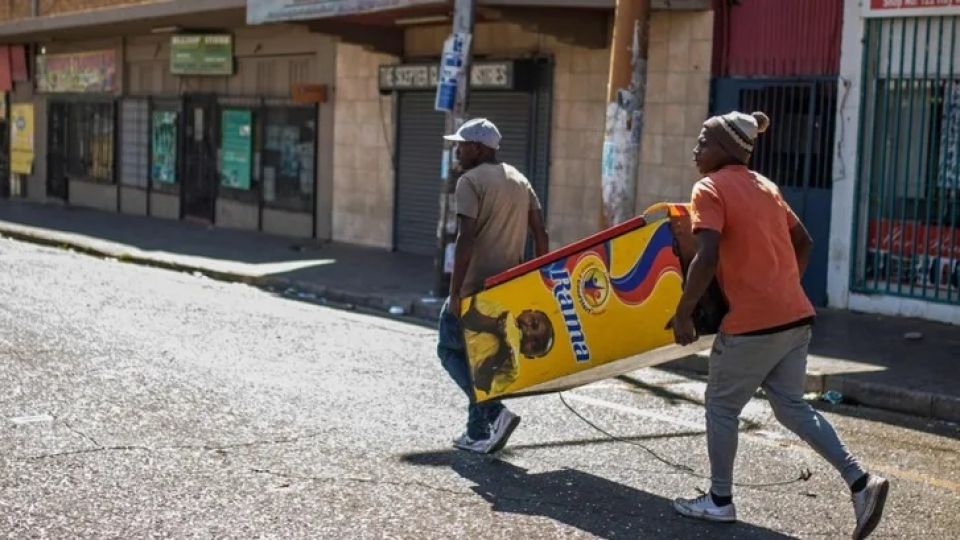
Fears of similar bloodshed have emerged as the ongoing anti-migrant protests by vigilante groups degenerated into a looting spree this past weekend, with KwaZulu-Natal (KZN) province again the epicentre of the lawlessness.
Owned by foreign nationals, a number of shops, some of which had been closed to avoid confrontations with anti-migrant groups, were broken into and looted, mostly in the area of Estcourt, 173 kilometres northeast of Durban, the busiest port city in sub-Saharan Africa.
Police fired rubber bullets to disperse looters, but the businesses were stripped of all wares.
Tensions have been high since 38 foreign-born entrepreneurs took local mayor Nhlanhla Myeza to the Pietermaritzburg High Court and the court granted an interim order that he must allow the shop owners, predominantly Ethiopian, in Estcourt access to their shops to resume doing business.
Myeza is accused of fanning anti-migrant tensions after the municipality closed the shops at the end of April during marches by locals.
Despite the court granting the shop owners some relief, he allegedly ordered that the stores remain closed.
Municipal officials confiscated the keys.
Robert Netshiunda, provincial police spokesperson, confirmed the looting but told the media calm had been restored.
The looting incidents had earlier been reported in Bloemfontein, South Africa’s judicial capital, in the Free State province.
There have also been incidents of looting and property destruction in the KwaNonqaba (Mossel Bay) area of the Western Cape province.
These incidents of violence are again heavily suspected to be xenophobic in nature, with local protests targeting foreign nationals and establishments in the area.
The Mossel Bay Municipality confirmed an unspecified number of people had been displaced.
It appreciated individuals, organisations, churches and community groups that stepped forward to support those affected.
Foreign missions in South Africa have arranged with the municipality for the safe evacuation of their citizens.
“As buses begin arriving to transport displaced persons in line with arrangements made by their respective consulates, your continued support is helping ensure that individuals and families can begin their journeys safely and with the necessary provisions,” the municipality stated.
However, some people remain housed temporarily at various municipal community facilities in several locations, which officials said were not being disclosed for public safety reasons.
“Security and additional law enforcement have been deployed at all municipal facilities housing displaced persons to ensure continued public safety,” the municipality stated.
Analysts have warned that the looting of foreign-owned businesses could result in bloodshed similar to that of 2021 while also adding to the unemployment crisis in South Africa.
Some South Africans employed at the looted or burnt businesses are among those working in the informal sector.
“Every shop looted is a job burned. Every investor who runs is a future stolen,” said a commentator.
The informal sector is the heartbeat of the township economy and the wider South African economy as the country’s formal economy battles to create jobs.
In 2021, a looting spree alongside violence after Zuma was jailed left hundreds of people dead.
There is concern over the lack of prosecution of the perpetrators, as is the case during the current anti-migrant protests, where vigilantes are openly defying the government of President Cyril Ramaphosa, whose response has gone little further than condemnation.
– CAJ News