
by HAOYU ZHANG
Special Correspondent
BEIJING, (CAJ News) – CHINA’S rise from a largely agrarian society to a global economic powerhouse is one of the most remarkable development stories in modern history.
Through strategic planning, massive infrastructure investment, scientific advancement, and technological innovation, China has transformed itself into a leading force in the global economy.
Today, the country stands as a symbol of industrial efficiency, modern urbanisation, and technological progress.
One of the greatest drivers of China’s success has been its world-class infrastructure development.
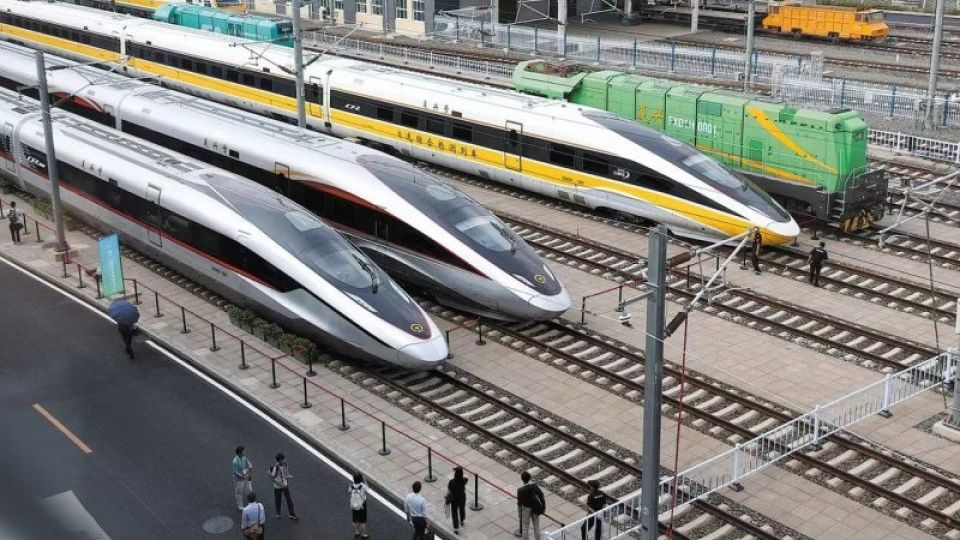
The country possesses the largest high-speed rail network on earth, stretching across tens of thousands of kilometres and connecting major cities with speed and efficiency.
Trains travelling at more than 350 kilometres per hour have revolutionised transportation, boosted tourism, reduced travel times, and strengthened trade between provinces.
Mega projects such as the Beijing–Shanghai High-Speed Railway demonstrate how modern transport infrastructure can stimulate economic growth and national integration.
China has also become globally recognised for its advanced urban infrastructure. Cities such as Shanghai, Shenzhen, and Guangzhou showcase futuristic skylines, intelligent transport systems, and highly efficient public services.
Massive bridges, underground metro systems, modern airports, and smart city technologies have helped improve productivity and living standards for hundreds of millions of people.
The Hong Kong–Zhuhai–Macao Bridge, one of the longest sea-crossing bridges in the world, reflects China’s engineering excellence and ambitious vision.
Technology and innovation have equally played a decisive role in China’s transformation.
The country is now a global leader in artificial intelligence, robotics, telecommunications, and digital finance. Chinese technology companies have pioneered innovations in mobile payments, e-commerce, and smart manufacturing.
Digital platforms have enabled millions of businesses and consumers to participate in a rapidly expanding digital economy.
In many Chinese cities, people can complete nearly all financial transactions through mobile applications, creating one of the world’s most advanced cashless societies.
China’s achievements in telecommunications are particularly significant. The rapid expansion of 5G networks has strengthened industrial automation, healthcare systems, and digital connectivity.
Chinese firms have become major global players in telecommunications equipment and electronic manufacturing.
These advancements have supported the growth of industries ranging from autonomous vehicles to smart factories.
Scientific research and renewable energy development have further strengthened China’s global standing.
The country invests heavily in scientific innovation, space exploration, biotechnology, and clean energy solutions.
China operates one of the world’s most ambitious space programmes, including lunar exploration missions and the construction of its own space station.
In renewable energy, China leads the world in solar panel production, electric vehicle manufacturing, and large-scale wind energy projects.
These initiatives are helping the country reduce pollution while positioning itself as a leader in the global green economy.
Manufacturing remains another cornerstone of China’s economic success.
Through modern industrial zones, efficient logistics networks, and large-scale production capabilities, China became known as the “factory of the world”.
However, the country is now moving beyond low-cost manufacturing towards advanced production driven by automation, innovation, and high technology.
China’s development journey illustrates how long-term planning, infrastructure investment, technological innovation, and scientific progress can transform a nation into a global economic leader.
Its remarkable achievements continue to influence global trade, industry, and modern development across the world.
– CAJ News