
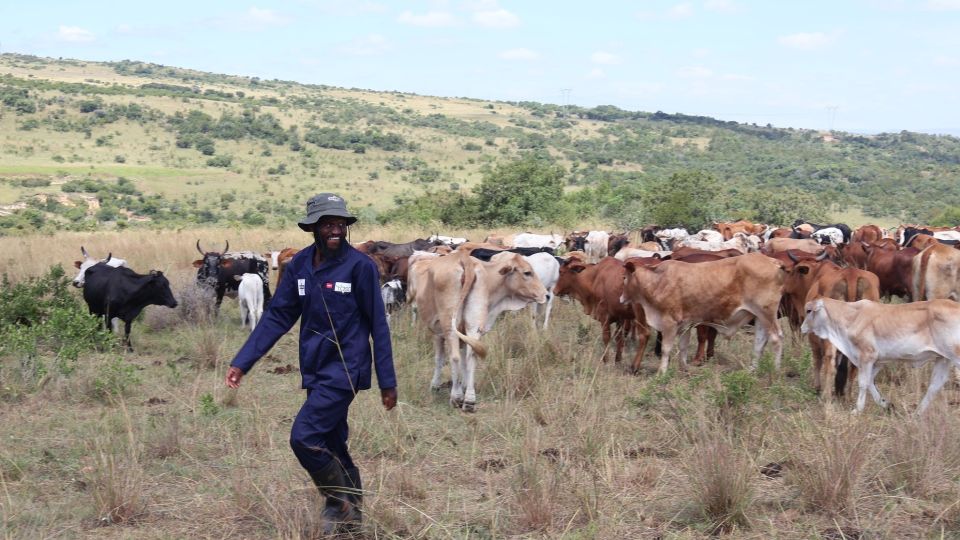
by AKANI CHAUKE
JOHANNESBURG, (CAJ News) – SOUTH African social enterprise Meat Naturally Africa is transforming the lives of communal farmers through sustainable livestock production, regenerative grazing and improved market access, as it marks its 10th anniversary this year.
The milestone coincides with the United Nations’ declaration of 2026 as the International Year of Rangelands and Pastoralists, highlighting the importance of sustainable land management and pastoral communities globally.
Headquartered in Matatiele, Meat Naturally Africa has helped more than 10 000 communal farmers generate over R134 million in income, with 87 percent of earnings coming from livestock auctions conducted directly in rural villages.
The organisation operates mainly in KwaZulu-Natal, Eastern Cape, Mpumalanga and Limpopo, including communities bordering the Kruger National Park. It has also extended operations into Botswana, Namibia and Mozambique.
South Africa’s communal and emerging farming sector accounts for between 40 and 50 percent of the country’s national cattle herd.
However, only around five percent of communal livestock reaches formal markets due to poor grazing conditions, degraded land and limited access to organised value chains.
Founded in 2016, Meat Naturally Africa addresses these challenges by equipping communal farmers with skills in regenerative grazing, livestock management, fire control, record-keeping and market readiness.
The organisation also operates mobile livestock auctions, shearing facilities and abattoirs to improve access to formal markets.
Founder and chief executive officer Sarah Frazee said the organisation’s mission focuses on sustainable livestock production, rangeland regeneration and wildlife protection while ensuring profits are reinvested into farming communities.
“Our approach has restored degraded ecosystems in South Africa, and we are now positioned to scale this model across Southern Africa,” Frazee said.
This year, Meat Naturally Africa achieved a global milestone after becoming part of the world’s first carbon credit issuance carrying both the Climate, Community and Biodiversity label and the VM42 methodology under the Verra Voluntary Carbon Standard.
The organisation’s Grassland Restoration and Stewardship in South Africa programme has already verified 249 094 tonnes of carbon dioxide reductions, generating carbon credits worth an estimated R53 million.
Meat Naturally Africa currently works with 180 communities across 580 000 hectares of communal rangelands and has trained 575 professional herders and more than 8 400 farmers in regenerative grazing techniques.
The organisation aims to expand its restoration model to five million hectares across Africa by 2030, targeting improved rural livelihoods, environmental sustainability and climate resilience.
– CAJ News