
from TSOANELO MOKHAHLANE in Maseru, Lesotho
Lesotho Bureau
MASERU, (CAJ News) – PERCHED high in the heart of Southern Africa lies the remarkable Kingdom of Lesotho, a country entirely encircled by South Africa.
Known as the “Mountain Kingdom” and the “Kingdom in the Sky”, Lesotho is the only independent state in the world that sits entirely above 1,000 metres in elevation.
Its dramatic highlands, crisp mountain air and deeply rooted cultural heritage make it one of Africa’s most unique and unspoilt tourism destinations.
Lesotho is landlocked within South Africa, nestled among the towering peaks of the Maloti Mountains. Its elevated terrain gives it a distinct climate, including snowfall in winter — a rare experience on the African continent.
The country’s capital, Maseru, lies on the western border and serves as the main gateway for international visitors.
Tourism in Lesotho thrives on authenticity, adventure and breathtaking natural scenery.
Unlike bustling metropolitan destinations, Lesotho offers tranquillity, raw landscapes and a deep connection to traditional Basotho culture.
Travellers are drawn by its untouched beauty — winding mountain passes, roaring waterfalls, ancient rock art and remote villages where life moves at a gentler pace.
Adventure tourism plays a major role.
The iconic Sani Pass, one of the most dramatic mountain passes in Africa, attracts thrill-seekers eager to navigate its steep gravel switchbacks.
Pony trekking through highland villages provides visitors with an intimate glimpse into rural life, while hiking and mountain biking trails reveal sweeping panoramas at every turn.
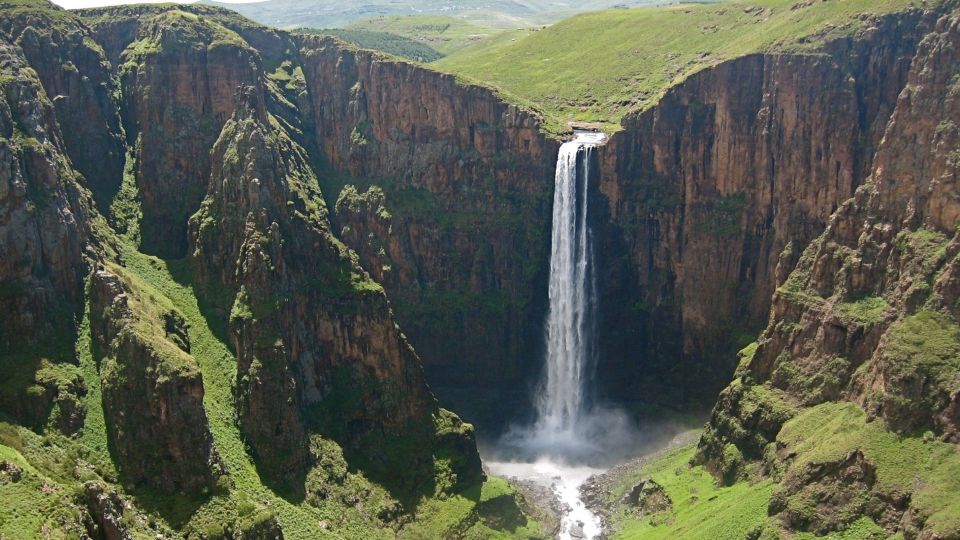
Water lovers are mesmerised by Maletsunyane Falls near Semonkong, one of the highest single-drop waterfalls in Southern Africa.
Meanwhile, history enthusiasts are captivated by Thaba-Bosiu, the sandstone plateau that served as the stronghold of King Moshoeshoe I and the birthplace of the Basotho nation.
Upon arrival, visitors are greeted by rolling highlands blanketed in emerald grass during summer and dusted with snow in winter.
Traditional Basotho huts dot the landscape, while shepherds in distinctive woollen blankets and conical mokorotlo hats add cultural charm to the scenery.
The Katse Dam, part of the Lesotho Highlands Water Project, offers striking views of deep blue reservoirs surrounded by rugged cliffs.
Other key destinations include Semonkong for waterfalls and adventure sports, Butha-Buthe near the Afriski Mountain Resort for winter skiing, and the scenic Tsehlanyane National Park for biodiversity and eco-tourism.
No journey to Lesotho is complete without sampling traditional cuisine.
Visitors savour papa (maize porridge), moroho (wild spinach), and hearty stews prepared with locally sourced ingredients.
Nyekoe, a steamed bread, and motoho, a fermented sorghum drink, are firm favourites. Locally brewed ginger beer and traditional sorghum beer offer refreshing tastes of Basotho hospitality.
Tourism is a growing and vital sector in Lesotho’s economy. It generates employment in accommodation, guiding services, transport, handicrafts and food production.
Community-based tourism initiatives empower rural villages by creating income through pony trekking, homestays and craft markets.
As visitor numbers rise, so too do opportunities for youth employment and small enterprise development.
Lesotho may be small in size, but it is vast in beauty, culture and adventure.
For travellers seeking authenticity, dramatic landscapes and heartfelt hospitality, the Mountain Kingdom promises an unforgettable African escape.
– CAJ News