
from DANAI MWARUMBWA in Harare, Zimbabwe
Zimbabwe Bureau
HARARE, (CAJ News) – THE United States is recalibrating its engagement with Africa, adopting a more diplomatic and cooperative posture as it seeks access to critical rare earth minerals, particularly from Zimbabwe, amid intensifying global competition with China over strategic resources.
Washington’s shift follows its recent announcement that it is diversifying sources of critical minerals worldwide, with Zimbabwe emerging as a key potential partner due to its vast and largely untapped mineral endowment.
For decades, China has steadily deepened its economic ties across Africa, securing long-term access to minerals essential for advanced manufacturing, renewable energy, and defence technologies.
The United States, which imposed economic sanctions on Zimbabwe in the early 2000s following the country’s land reform programme, now appears to be softening its stance as rare earth minerals grow increasingly central to global supply chains.
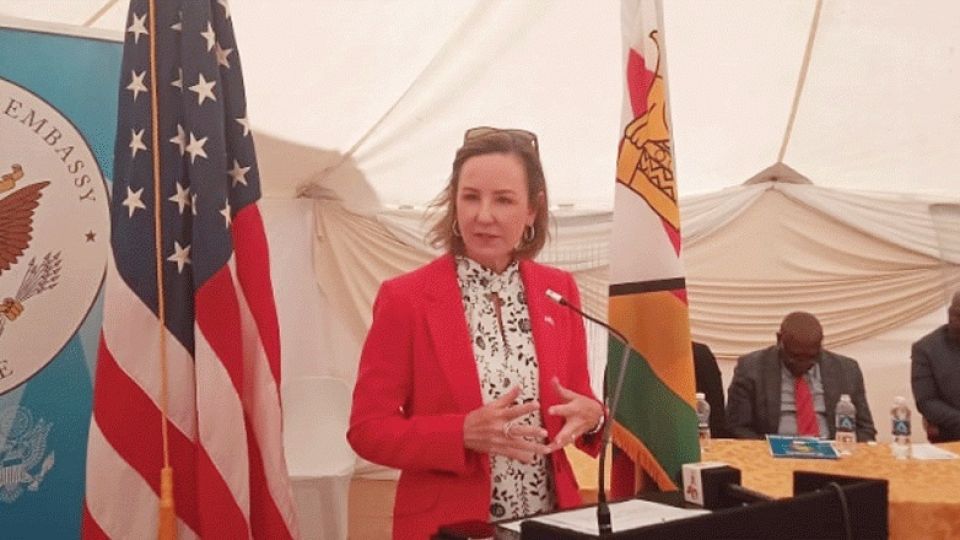
United States Ambassador to Zimbabwe, Pamela Marie Tremont, confirmed Washington’s new approach in a public statement on X (formerly Twitter), saying verbatim: “The United States is diversifying its sources for critical minerals around the world. We are ready to engage with Zimbabwe on mutually beneficial supply chain transactions.”
Rare earth minerals are indispensable to modern economies.
They are used in electric vehicle batteries, wind turbines, semiconductors, smartphones, medical imaging equipment, precision-guided weapons, and artificial intelligence hardware.
Countries that control stable supplies gain strategic leverage across technology, energy, and national security sectors.
Zimbabwe is known to host several rare and critical minerals urgently sought by both the United States and China.
These include lithium, essential for electric vehicle batteries and energy storage; nickel, used in battery cathodes and aerospace alloys; cobalt, vital for high-performance batteries and defence systems; platinum group metals (PGMs), critical for catalytic converters, hydrogen fuel cells and medical devices; and rare earth elements such as neodymium, used in permanent magnets for wind turbines and advanced electronics.
Zimbabwean authorities have repeatedly emphasised value addition and beneficiation.
Mines and Mining Development Minister Polite Kambamura has previously stated: “Zimbabwe’s policy is clear: minerals must be beneficiated locally to maximise value for the economy.”
This position underscores Harare’s intent to move beyond raw exports toward industrial development.
For the United States, engagement with Zimbabwe offers supply chain diversification away from overreliance on China, while Zimbabwe stands to gain technology transfer, infrastructure investment, and expanded export markets.
Analysts note that partnerships built on mutual benefit, rather than coercion, are more likely to produce sustainable outcomes.
As global competition for rare earths intensifies, Zimbabwe’s mineral wealth places it at the centre of strategic diplomacy.
Observers say constructive engagement, respect for sovereignty, and long-term investment will determine whether this renewed U.S interest translates into tangible economic transformation for the country and balanced global mineral markets.
– CAJ News