
by LUKE ZUNGA
JOHANNESBURG, (CAJ News) – I was in Durban during Christmas holidays, snaking my way into one of the oldest cities on the African continent.
I first visited the splendid city of Durban in 1989, one year before Nelson Mandela was released from prison to lead a new rainbow nation.
The city is in decay, thirst for capital and confidence. There are no construction gantries on the skyline.
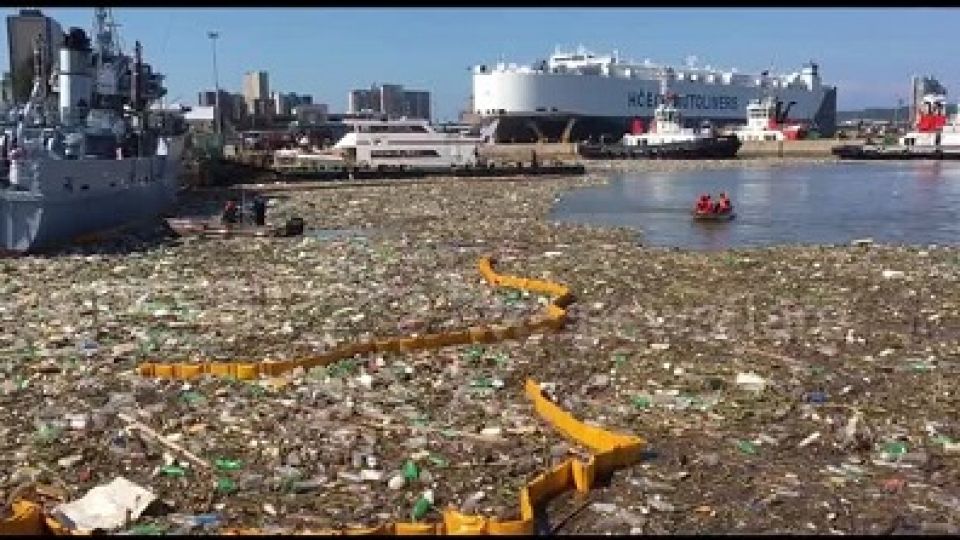
The dull walls of city buildings are flaking, metals rusted and streets peppered with litter, in some areas indiscriminate dumping.
The waters on the port-side where visitors and citizens ride boats are murky, with dead fish floating and disgusting.
That is within 500 meters of the provincial government offices, where smart dressed bourgeois are employed. They don’t see the decay.
The surrounding leafy suburbs are infested with emjondolo, millions of squatters made of wooden planks, plastic and corrugated sheets, drooping with litter in the humid, rainy and flooding climate of the Indian Ocean.
These dwellers are largely unemployed, sculpting a pittance from Europeans and Indian employers.
Crime, drunkenness, underage pregnancy with children with astray fathers rely on government grants to survive.
Durban is a microcosm of decaying African cities, such as Pietermaritzburg, Johannesburg, Harare, Maputo, Beira, Lilongwe, Nairobi, Luanda, Kinshasa, Lagos, Accra, Cairo Central Business Districts, among others.
While many blame the politicians, the culprits are employed in the offices; the technocrats, the bourgeois, especially the Director Generals, Permanent secretaries and professionals of such ilk who are waiting for foreign investors.
They need to know that these economic and social matters are not solved by foreign investors.
They must re-calibrate their mindsets to understand that African countries can raise capital for their development.
Each country has the capacity to raise capital to seed citizens into industrial participation and growth.
It is the only way to pull these dying cities back to life. The politician is equally a voluntary victim of poor technocratic advice.
Raising capital is so simple. Identify resource centers. The quickest is the mobile phone. Citizens can contribute the capital through the mobile phones.
One cent added to the cost of sim-card activation can be collected by the network operators without hurting the person contributing it.
South Africa has 1.6 billion activations a day. That is equivalent to R16 million a day, R480 million a month and R5.76 billion a year, easy capital to be managed by a credible committee to seed citizens into industry.
The capital targets programs to germinate factories and leave them at the bank level, where financial markets grow the industries going forward. These are the citizens who will redevelop their cities.
Markets and/or foreign investors are too few and cannot dent the huge task of developing African cities and their communities who are in the slums, unemployed and condemned to poverty.
Government must assist where markets do not cover. Markets do not finance to start factories.
All financial institutions do not finance to start a factory or any business. The average cost of an entry level factory is US$250,000.
The man in the street cannot raise such funds. Therefore, a program of raising funding is required.
If citizens see an example of the industrial program, they will easily agree to contribute the capital in whatever method governments may decide for them to participate.
Many people think Africans have no knowledge of product ideas. That is not true. Product ideas are like art, music and Africans are full of ideas, because their zest is to improve themselves.
We developed a two-day training course, which demonstrates how to come up with viable product ideas and to polish existing ones.
After the training, 76% of ordinary citizens, who attended the free training came back with viable product ideas, some so brilliant that they will change the economic face of Africa.
Then we set up one team to process the product ideas through technical drawings or chemical formulations, integrated manufacturing, plant layout and business plans.
But nobody, including the South African government, could provide the funding to start the factories as a program, wherein each participant operates their own factory under the training and guidance of a project manager and a production engineer at one industrial site.
Any city in Africa can use this industrial model by placing US$10 million into a trust account.
We will train the first group of citizens and set up about 50 factories over four years and a new marketing outfit.
Any government can provide the capital, and we invite any investor to provide the capital and benefit from the marketing outfit developed as part of the program.
NB: The views expressed in this opinion piece are those of the author, Luke Zunga, and not those of CAJ News Africa. Luke Montgomery Dzipange Zunga, is Lead for South African Development Foundation.
– CAJ News