
by TINTSWALO BALOYI
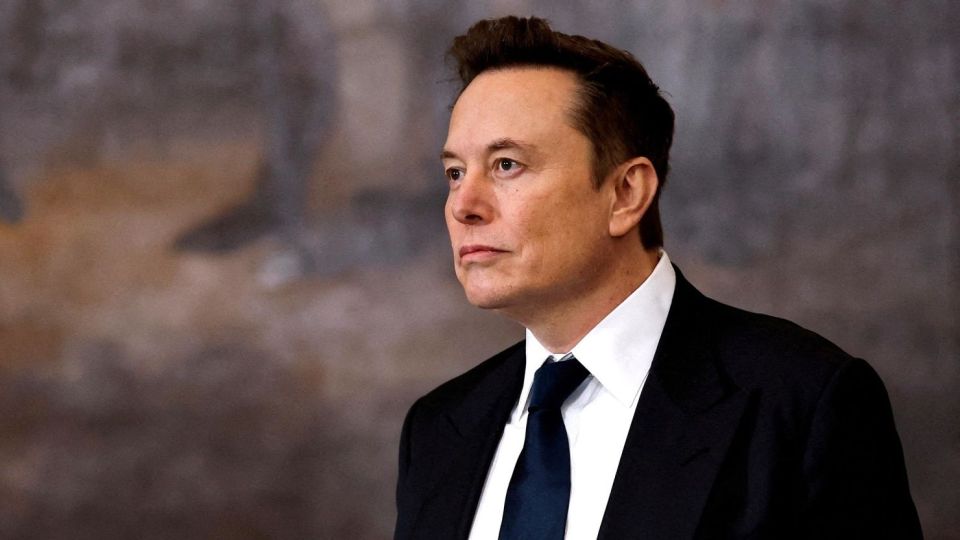
JOHANNESBURG, (CAJ News) – ON the international arena, South Africa’s government of national unity (GNU) has maintained a united front against Elon Musk, fervently opposing his allegations of “white genocide.”
In contrast, domestically, the South Africa-born businessman, the world’s richest individual, is the source of the latest dispute between these main partners in the inclusive government.
The African National Congress (ANC), which is the biggest party in the administration, and the Democratic Alliance (DA), its biggest partner in the fragile government of national unity, are at loggerheads after Solly Malatsi, the Minister of Communications and Digital Technologies, instructed the telecoms regulator, the Independent Communications Authority of South Africa (ICASA), to amend equity ownership rules that could benefit the Musk-owned Starlink, among other foreign operators.
Malatsi is a member of the DA.
The ANC said it was “deeply concerned” by Malatsi’s instruction given via the Government Gazette.
President Cyril Ramaphosa’s party argues the gazette introduces policy directions that exceed the Minister’s legislative authority, undermine South Africa’s transformation framework and threaten the integrity of the country’s information and communication technology (ICT) and postal regulatory environment.
“It mirrors a troubling trend where ministers belonging to the DA seek to bypass Parliament, by reforming laws through directives rather than following democratic legislative processes,” ANC stated.
Malatsi proposes the introduction of the Equity Equivalent Investment Programmes (EEIPs) into the local ICT sector.
EEIPs would enable companies that cannot meet direct ownership requirements to accomplish empowerment obligations.
Starlink has pledged R500 million (US$29,76 million) for free internet in 5 000 rural schools.
This would see it evade ceding 30 percent ownership stake to South Africa’s historically disadvantaged groups in the context of equity ownership and Black Economic Empowerment (B-BBEE).
Khusela Diko, Chairperson of the Portfolio Committee on Communications and Digital Technologies, has called for the immediate withdrawal of Malatsi’s policy direction.
The ANC parliamentarian said, “These policy directives are an affront to the centuries old fight for equity and redress by the black majority in this country.”
According to the committee, Malatsi “has neither the legislative nor moral authority to reverse the gains of democracy through this unilateral action” unsupported by ICASA or the department he leads.
“To the best of our knowledge he has once again also not sought the approval of Cabinet to gazette the said policy directives, which could be reasonably expected given the import of the matter,” the committee stated.
Diko is in the new year scheduled to convene a meeting of the committee to consider these developments.
The ANC has found itself an unlikely ally on the issue-the Economic Freedom Fighters (EFF).
It believes Starlink’s entry poses a security concern considering what it terms the hostility of Musk against South Africa.
“For an unrepentant racist and megalomaniac like Elon Musk to enter the telecommunications market in South Africa, granting him possible control of infrastructure in the long term, is irresponsible,” EFF stated.
The DA is shielding its minister from criticism and accuses the ANC of misrepresenting the law in an attack on Malatsi’s policy direction.
Tsholofelo Bodlani, DA spokesperson on Communications and Digital Technologies, said this exposed the party’s political expediency.
In doing so, the DA argues the ANC ignores laws enacted under successive ANC-led governments and the agreed priorities of the GNU, as set out in the Medium-Term Development Plan (MTDP).
Bodlani said Malatsi’s policy direction did not allow anyone to bypass empowerment or transformation requirements but sought to prevent international companies from being excluded in cases where local ownership is not feasible.
“This matters because South Africa urgently needs more investment and wider access to connectivity. Excluding global firms serves neither objective,” Bodlani said.
Starlink is a satellite internet constellation operated by SpaceX, providing high-speed, low-latency broadband internet access globally, especially in rural and underserved areas. This service uses a large network of small satellites in low earth orbit.
In the continent’s largest economy, Starlink is not yet legally licensed to operate due to local ownership rules.
In May, delegation of the GNU, comprising among others, leaders of the ANC and DA embarked on a mission to the White House in the US to dispel allegations of “white genocide”, as perpetrated by the likes of Musk.
Relations between the two countries are rock bottom.
– CAJ News