
from EMEKA OKONKWO in Abuja, Nigeria
Nigeria Bureau
ABUJA, (CAJ News) – PUBLIC apprehension has returned to haunt Nigeria, the world’s largest Black democracy, amid concerns over a power vacuum following the president’s lengthy stay out of the country.
While there is nothing new about this trend, the West African country has lurched into an unprecedented development in which, simultaneously, the president, his deputy and the President of the Senate are all abroad.
This has reignited a critical, unsettling debate over institutional continuity and legal oversight.
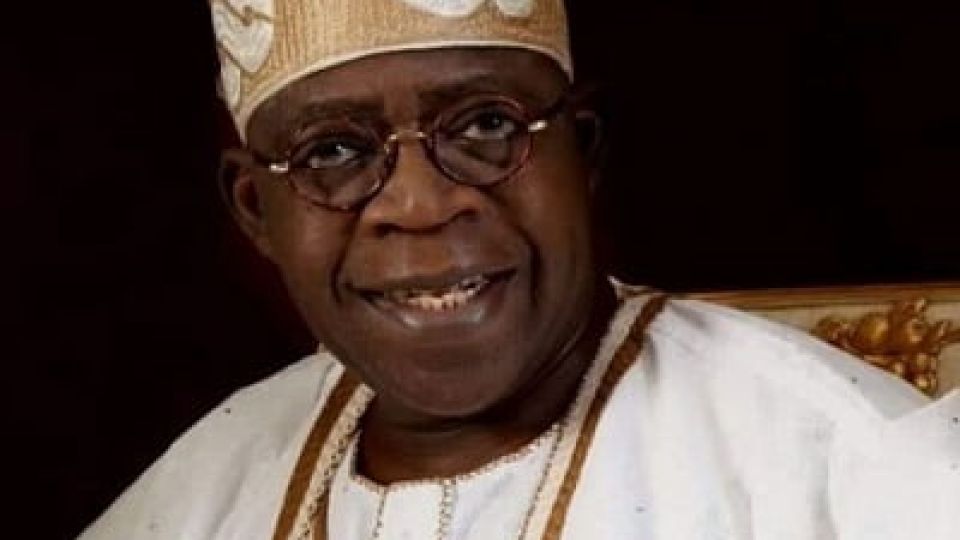
President Bola Tinubu, who is seeking re-election in polls early next year, began his three-week annual vacation on 30 August. It has taken him to the United Kingdom and he is currently in France.
On Monday, the Presidency announced that he had extended his “working vacation” by “a few days” and would return to Nigeria at the weekend.
“Since he began the vacation, President Tinubu has continued to keep in touch with home, directing the affairs of the nation,” his office stated.
Such affairs, according to the Presidency, include his ordering an independent panel to investigate the deaths of 37 illegal miners in Minna, following their detention by the Nigeria Security and Civil Defence Corps.
While away, Tinubu delegated his deputy, Kashim Shettima, to act as president and represent him at some official functions.
However, Shettima is now also out of the country, having left on Sunday to represent Nigeria, in Tinubu’s absence, at the 81st United Nations General Assembly (UNGA 81) in New York, the United States.
Godswill Akpabio, Senate President, who can only be acting president, albeit under extreme circumstances when the president and the deputy are unavailable due to death, resignation, impeachment or permanent incapacity, is also out of the country.
At the time of publishing, he was in Rome, Italy, on a spiritual pilgrimage to “pray for Nigeria” amid the country’s prevailing challenges and the 2027 elections, which are predicted to be a security concern.
Some Nigerians are questioning who, then, is currently running the country and the ruling All Progressives Congress (APC), in power since 2015.
Tinubu’s office stated that the Secretary to the Government of the Federation, Senator George Akume, who has also been representing the president at events, would continue to do so.
On the APC front, the Director-General of the Presidential Campaign Council (PCC), Senator Abubakar Yari, is at the helm.
Atiku Abubakar, Vice President at the advent of democracy in 1999 and a perennial main presidential contender, including for the upcoming elections, raised concern.
“Nigeria cannot be governed by assumptions. It cannot be governed by presidential social-media posts from Europe,” he protested.
“It cannot be governed by photographs from private dinners at the Élysée Palace. It cannot be governed on autopilot,” said Atiku, who was deputy to Olusegun Obasanjo.
The Presidency hit back at Abubakar and “a United States-based lobbying firm headed by an ex-convict” for questioning Tinubu’s non-attendance at UNGA 81.
Auta Ibrahim, a political expert, commented on the apprehension during an interview with CAJ News in Abuja.
He said the anxiety was justified because Nigeria carries historical trauma from leadership vacuums, most notably the constitutional crisis during then President Umaru Yar’Adua’s prolonged illness until he died in office in 2010, and later the nervousness during President Muhammadu Buhari’s frequent, extended medical trips abroad. He passed on in 2025 but was out of the presidency after his two constitutional terms.
Ibrahim noted that during those two periods of uncertainty, the respective vice presidents were available to steer the ship.
“A simultaneous, triple-hemisphere absence, with the president, deputy and Senate President all out of the country simultaneously, catapults the anxiety to extreme levels,” he said.
The expert said that in a complex situation like Nigeria’s, which is facing severe economic and security challenges, governance could not be administered as “a remote-control enterprise”.
“When executive command, deputy oversight and legislative leadership are all physically evacuated from Abuja at once, it turns ordinary foreign travel into an unnecessary anxiety test for the country.”
Constitutional Sections 145 (Acting President during Absence) and 146 (Vacation of Office/Succession) address such concerns in part.
The first dictates that whenever the president transmits to the President of the Senate and the Speaker of the House of Representatives a written declaration that he is proceeding on vacation or that he is otherwise unable to discharge the functions of his office, his powers shall be transmitted to the vice president as acting president.
However, if no such formal written declaration is transmitted, or if the procedure of succession is complicated by the simultaneous absence of key legislative gatekeepers, it triggers intense debate over whether an “acting” capacity is automatically necessitated by physical travel alone.
The other section summarises the hierarchy of succession in the event of a permanent vacancy, death, resignation, removal or where the president or vice president is unable to perform their functions due to permanent incapacity.
The legal tension is that while it primarily addresses permanent or incapacitating vacancies rather than temporary foreign trips, its strict ordering, moving from the president to the vice president, and then to the Senate President and Speaker of the House, highlights why having the top three figures out of the country simultaneously unsettles constitutional watchdogs.
– CAJ News