
by AKANI CHAUKE
JOHANNESBURG, (CAJ News) – AMID African politics often marred by disputed elections and unconstitutional attempts at term extensions, Cape Verde has lived up to its reputation as one of the continent’s most stable and transparent democracies.
The opposition African Party for the Independence of Cape Verde (PAICV) has won the parliamentary election, returning to power after a decade out of office.
It defeated the Movement for Democracy (MpD) in polls held on Sunday in the archipelagic country in the central Atlantic Ocean off the coast of West Africa.
Cape Verdeans conducted their parliamentary elections peacefully to elect legislators in a continent where voting is often associated with conflict.
The country, officially Cabo Verde, rarely attracts international headlines for the wrong reasons, and the MpD’s loss of its majority went largely unnoticed.
Some 416,335 Cape Verdeans were registered to vote across 1,294 polling stations.
Ahead of the elections, observers said conditions existed for a free and fair poll in the country of more than 525,000 people.
“Surely, Cabo Verde remains a shining model for democratic governance,” Bankole Adeoye, African Union (AU) Commissioner for Political Affairs, Peace and Security, said on election day.
According to partial results released by the National Election Commission (based on 98.2 percent of polling stations), the 72-seat National Assembly is now led by the centre-left PAICV with 37 seats, equivalent to 46.7 percent of the vote.
A total of 37 seats is required for a majority, indicating PAICV has secured an unassailable lead.
PAICV leader Francisco Carvalho (55), the current mayor of Praia, is set to become the country’s new prime minister, replacing Ulisses Correia e Silva, who has led the centre-right MpD.
In power since 2016, Silva conceded defeat and congratulated his successor, noting that his party failed to achieve its goal of remaining in power. After an unsuccessful bid for a third term, the outgoing leader (63) announced his resignation from party leadership.
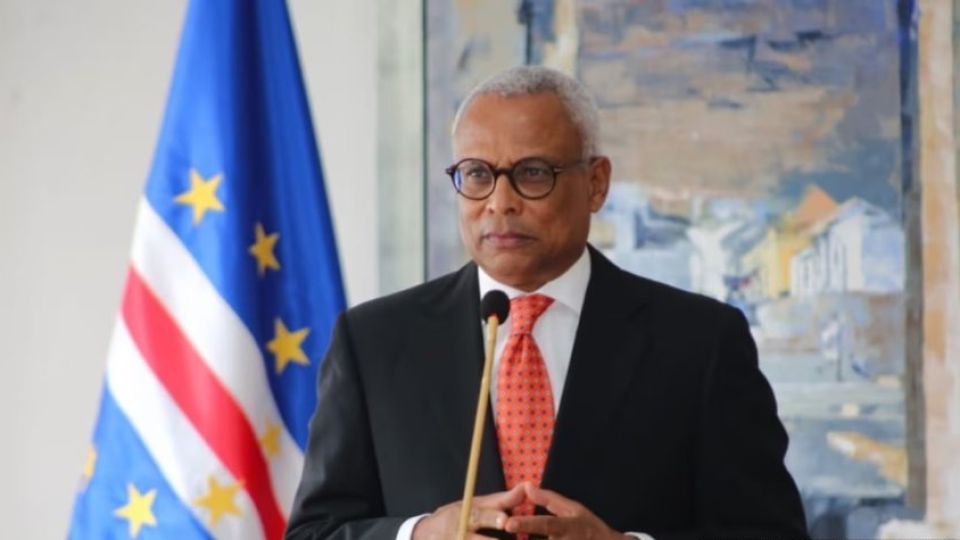
Carvalho, a sociologist and economist, will share power with President José Maria Neves, also of PAICV, under the semi-presidential system.
Presidential elections are scheduled for 15 November.
Currently, before Carvalho’s swearing-in, Cape Verde has a president whose party holds fewer parliamentary seats due to its semi-presidential system, in which the president and prime minister are elected separately.
The president serves as head of state, commander-in-chief and national mediator, while the prime minister holds executive authority.
This system often results in “cohabitation”, where voters split power between opposing parties.
The United Nations in Cape Verde praised the peaceful, transparent and inclusive electoral process.
“The UN will continue working with Cabo Verde’s new government and all stakeholders to advance the SDGs and leave no one behind,” it said.
Elections were held against a backdrop of concerns over unemployment and economic pressure, driven by limited natural resources, a narrow economic base and exposure to external shocks.
The International Monetary Fund (IMF) projects economic growth of 4.8 percent in 2026.
Cape Verde gained independence from Portugal in 1975.
– CAJ News