
by AKANI CHAUKE
JOHANNESBURG, (CAJ News) – AS momentum builds for Formula 1’s return to Africa, South Africa’s case is increasingly being framed not as symbolic aspiration, but as an economic, strategic and developmental opportunity that is edging closer to reality.
The debate is no longer simply whether the country can host a Grand Prix, but whether it can align infrastructure, governance and investment quickly enough to secure one of global sport’s most commercially powerful properties.
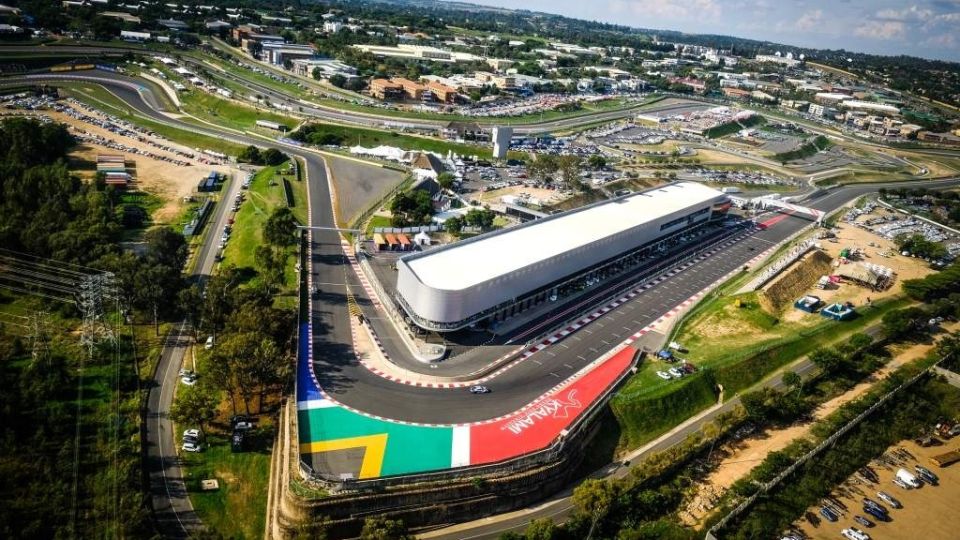
Progress has accelerated over the past year. Kyalami’s proposed upgrade towards FIA Grade 1 status – the certification required to host Formula 1 – was approved in June 2025, establishing a formal pathway for the circuit to meet international standards once works are completed.
At the same time, pressure for Formula 1 to return to Africa has intensified, including public support from seven-time world champion Lewis Hamilton, who has repeatedly stated he does not wish to retire without racing on the continent.
For motorsport commentator Wesleigh Orr, Founder and Head Coach of WORR Motorsport, the issue has moved beyond capability to coordination.
“South Africa has already proven that it can host events of enormous scale and complexity under international scrutiny. The Formula 1 conversation should now be less about whether we are capable, and more about how the right public and private stakeholders align to make it happen,” he said.
The economic argument is increasingly central to the bid. South Africa’s hosting of the 2010 FIFA World Cup remains a key benchmark.
According to South African Tourism, “309,554 foreign tourists travelled to South Africa specifically for the tournament, generating over R3 billion in direct tourist spend.”
The figures continue to be cited as evidence of the country’s ability to convert global sporting events into measurable tourism and hospitality revenue.
More recent events have reinforced that trajectory. South African Tourism has also reported that the inaugural LIV Golf event at Steyn City generated an economic impact of more than R800 million, driven by spending on accommodation, transport, hospitality and related services.
Orr argues that Formula 1 would significantly amplify such effects.
“Major international sport is not just about spectatorship,” he said.
“It is a tourism driver, a destination-marketing platform, a catalyst for jobs, and a powerful signal to investors. South Africa has already demonstrated that it can capture value from world-class events. Formula 1 would take that to another level.”
Beyond tourism, infrastructure investment, and commercial returns, analysts also point to longer-term developmental gains.
These include skills transfer in engineering, logistics and hospitality, as well as increased visibility for South Africa as an investment destination.
While circuit readiness has often been cited as a barrier, that discussion has shifted. With FIA approval of Kyalami’s Grade 1 upgrade plan already secured, the focus is now on financing, timelines and stakeholder coordination rather than technical feasibility.
Africa’s absence from the Formula 1 calendar also remains a central point. The continent last hosted a Grand Prix in 1993 at Kyalami, and it remains the only inhabited continent without a race.
“When Formula 1 only happens elsewhere, it can start to feel like the top of the sport belongs somewhere else,” Orr said.
“The moment it returns to Africa, it becomes more real. It becomes visible, tangible and believable for young drivers.”
That visibility, he argues, is critical for talent development. Many African drivers currently relocate early in their careers due to limited high-level single-seater pathways on the continent, increasing financial and logistical barriers to progression.
Orr believes a Grand Prix in South Africa would strengthen grassroots motorsport development and validate existing programmes aimed at nurturing emerging drivers.
“Our responsibility is to ensure that when Formula 1 returns to Africa, African drivers are part of that story,” he said.
Ultimately, he argues, the opportunity extends beyond hosting a race.
“It is about building an industry, creating opportunity, and helping more young Africans believe that Formula-level racing is something they can pursue from a place of real proximity, not only from afar,” Orr said.
As discussions intensify, South Africa’s case is increasingly defined by three converging factors: established event-hosting capacity, a clearer infrastructure pathway, and growing global demand for Formula 1’s return to Africa.
“The question is no longer whether the opportunity is meaningful,” Orr said. “The question is whether we are prepared to execute.”
– CAJ News