
by SAVIOUS KWINIKA
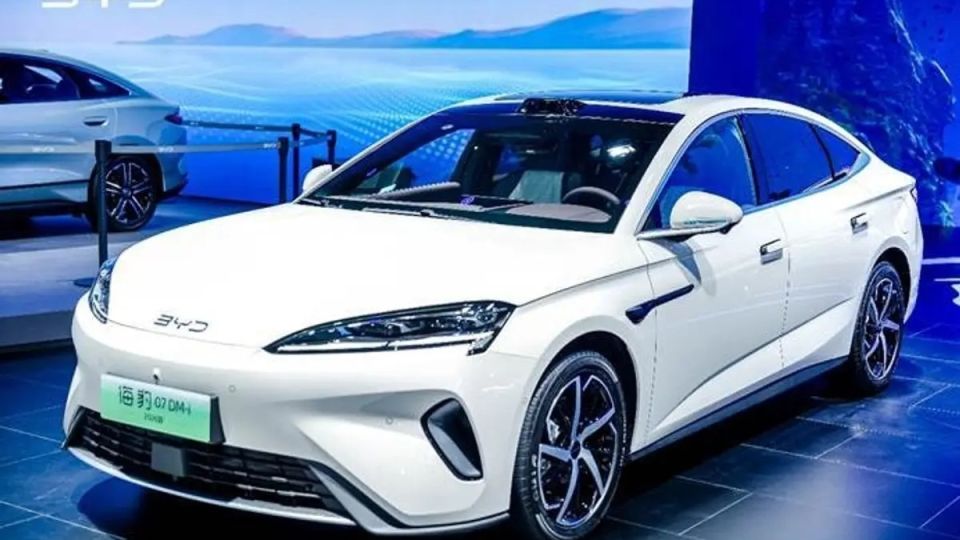
JOHANNESBURG, (CAJ News) – IN a historic shift for the global automotive industry, China’s BYD has overtaken America’s Ford Motor Company in worldwide vehicle sales for the first time in 2026, signaling a profound realignment of industrial power.
BYD’s rise has been driven by scale, vertical integration, and electric vehicle dominance. Unlike many Western rivals, BYD manufactures its own batteries, semiconductors, and key EV components in-house.
This tight control over its supply chain has insulated it from global chip shortages and volatile battery prices.
Its Blade Battery technology, competitive range figures, and rapid charging capabilities have made its models attractive across Asia, Europe, Latin America, and increasingly Africa.
Pricing has also played a decisive role. BYD leverages China’s vast manufacturing ecosystem to produce vehicles at lower cost without sacrificing technology.
Buyers are often offered advanced driver assistance systems, large infotainment displays, over-the-air updates, and premium interior finishes at prices undercutting Western competitors.
In emerging markets especially, the value proposition is difficult to ignore.
Ford’s decline in relative ranking reflects structural challenges rather than collapse. The company remains strong in North America, particularly with trucks and commercial vehicles.
However, it has been slower to globalize its EV portfolio at scale. Legacy costs, unionized labour structures, and a complex global supply chain have limited pricing flexibility.
Meanwhile, competition in Europe and Asia has intensified, eroding Ford’s traditional export advantages.
Chinese vehicles are increasingly securing new markets for several reasons.
Technology is central: Chinese automakers lead in battery energy density, EV platforms, and smart cockpit software.
Price competitiveness follows closely. But it is not price alone. Comfort, digital entertainment systems, panoramic displays, voice assistants, and extended warranties are bundled as standard features.
Maintenance costs are also lower in many regions due to simplified EV drivetrains and competitively priced parts.
The latest global top 10 best-selling vehicles as of February 2026 are led by the Tesla Model Y, followed by the BYD Song, Toyota Corolla, Ford F-150, BYD Qin, Toyota RAV4, Honda CR-V, Volkswagen Tiguan, BYD Dolphin, and Chevrolet Silverado.
Chinese brands now account for multiple entries, underscoring their global reach.
For the traditionally dominant Western auto industry, BYD’s milestone is a wake-up call. It confirms that leadership in internal combustion engineering no longer guarantees supremacy in the electric era.
China’s early, state-backed investment in EV infrastructure, battery research, and charging networks has translated into industrial momentum.
China also benefits from being the world’s largest shipbuilder. Massive state-supported shipyards enable rapid production of vehicle carriers, reducing logistical bottlenecks.
This maritime capacity allows Chinese automakers to export at scale with fewer delays and lower freight costs, strengthening their global competitiveness.
Looking ahead, the US and Western industries face a strategic crossroads: accelerate electrification, localize battery production, and streamline manufacturing—or risk further market share erosion.
The 2026 sales crossover is more than symbolic. It marks the consolidation of China’s automotive ascendancy in an electric-first world.
– CAJ News