
from DION HENRICK in Cape Town
Western Cape Bureau
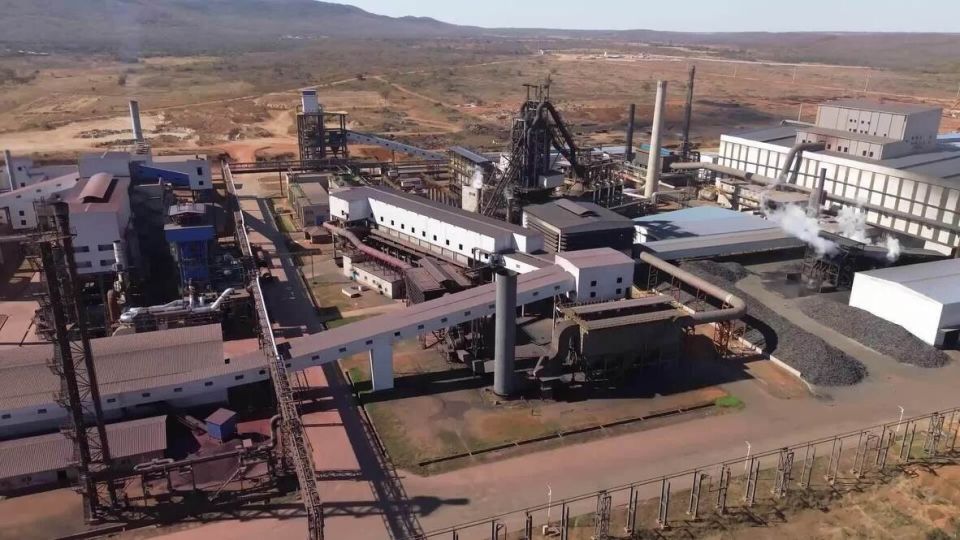
CAPE TOWN, (CAJ News) – AS the Investing in African Mining Indaba 2026 unfolded in Cape Town (8–12 February), a powerful pro‑Africa message resonated — Africa must move beyond exporting raw minerals and instead build value‑adding industries that process its abundant mineral resources on the continent.
African leaders are increasingly united behind the principle that owning and processing raw materials domestically transforms economies far more than merely shipping unrefined ore to Europe, Asia or the Americas.
Zambia’s President Hakainde Hichilema urged fellow African states to build comprehensive regional value chains that extend beyond extraction to processing, manufacturing and refinement.
South Africa’s Mineral and Petroleum Resources Minister, Gwede Mantashe, put it succinctly: “Africa is not for take, it’s an interested party… Protect your interest.”
For decades, multinational companies have extracted Africa’s rich mineral wealth — including cobalt, lithium, platinum, diamonds and rare earths — exporting them in raw form for lucrative processing abroad.
These dynamic transfers enormous value to Western and Asian industrial hubs while African economies receive only a fraction of the ultimate revenues from finished products.
The result has been limited industrialisation, low‑wage labour and stunted economic diversification.
If Africa were to ban the export of raw mineral material and insist on domestic processing, global supply chains would be significantly disrupted.
Western and Asian economies reliant on cheap raw inputs for high‑tech and green technologies would need to establish processing facilities closer to the source, accelerating investment into Africa’s industrial landscape.
This would strengthen African employment, technological transfer and GDP growth while reducing global dependence on distant processing hubs.
Africa is home to a staggering share of the world’s mineral resources.
The Democratic Republic of Congo (DRC) alone produces more than 70% of global cobalt, a critical component for batteries and electric vehicles.
The continent also contains vast rare earth elements (REEs) — a group of 17 metallic elements essential for electronics, renewable energy and defence systems.
Some estimates suggest Africa’s rare earth deposits could support decades of global demand, yet most are exported raw due to a lack of processing infrastructure.
Rare earths are not rare in quantity but rare in refined processing capacity — a gap African nations are increasingly determined to close.
Exporting raw materials impoverishes the continent because it traps countries in low‑value economic roles, exporting potential jobs and technological advancement.
Processing minerals locally, by contrast, creates high‑value jobs, stable industrial clusters, and skills development, while attracting long‑term investment.
At Indaba 2026, stakeholders like Brian Kagoro, Managing Director at Open Society Foundations, urged that “Africa’s mineral wealth must fuel opportunity and prosperity, not exploitation.”
Job creation, technology transfer, and enhanced sovereign revenue are but a few benefits of processing raw materials within Africa.
A future where African countries refine, manufacture and export finished goods would transform economies and uplift communities that have long been marginalised.
For Africa’s youth and future generations, retaining and processing mineral value on the continent is not merely economic strategy — it is a pathway to industrialisation, self‑reliance and sustained prosperity.
– CAJ News